
 By Ukumbi Afrika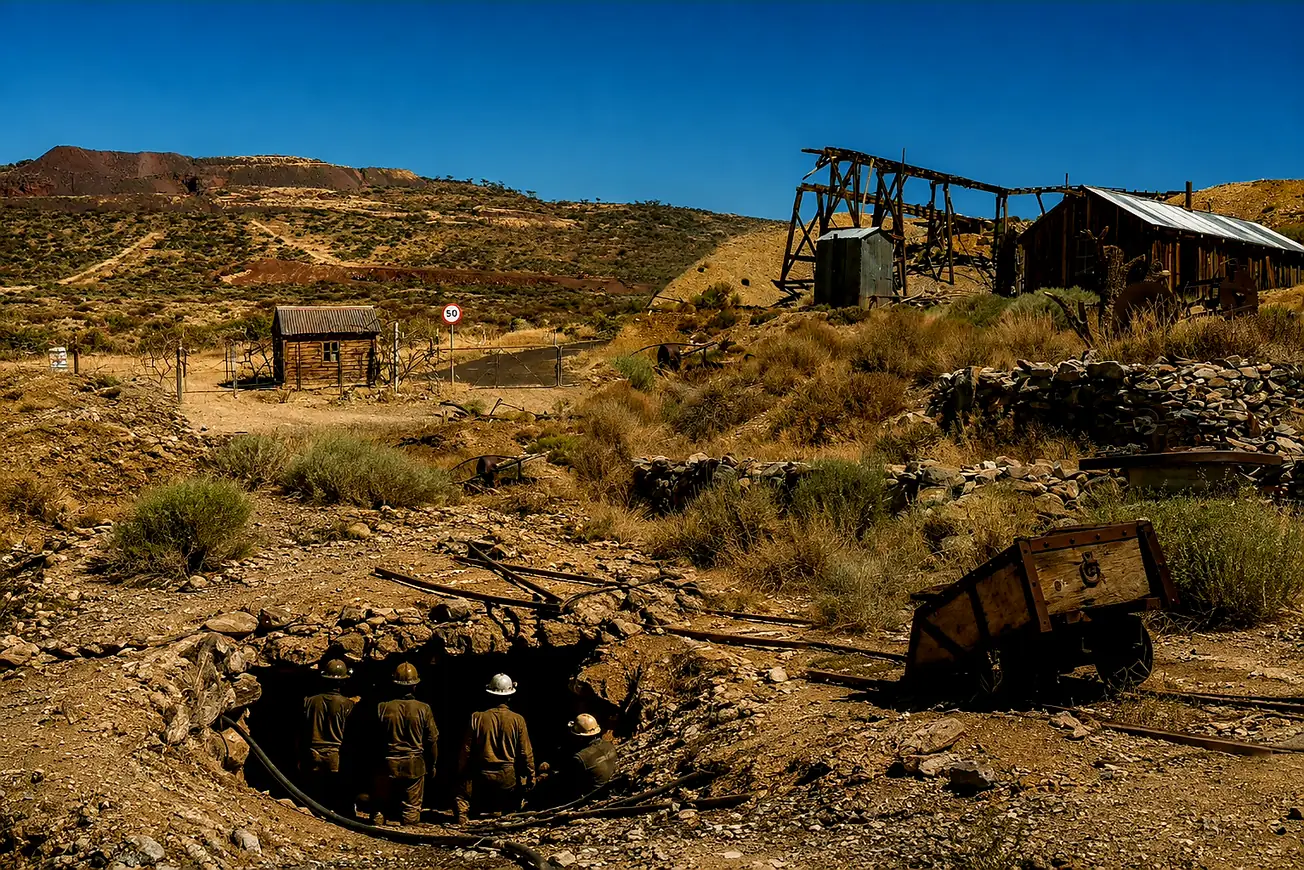
Fourteen people died and eight were injured after a tailings pile collapsed at a disused mine near Rustenburg, South Africa. The tragedy occurred on August 10, 2026.
According to the police, the people at the site were mining platinum group metals. Unfortunately, this is not the first such tragedy in African countries. And as the details of illegal mining reveal, the problem is far more complex than it may initially appear. Around some illegal mining operations, entire industries have emerged — involving miners, middlemen, transport companies, supply chains and facilities processing the extracted raw materials.
Zama zamas
In South Africa, illegal miners are commonly referred to as “zama zamas.” The term, however, covers a wide range of illegal mining activities and does not describe a single, homogeneous group. Illegal mining in South Africa can range from the small-scale theft of raw materials to operations controlled by organized criminal networks.Miners enter abandoned mines in search of remaining deposits, often operating under the control of violent gangs.
South African authorities have been trying to curb this practice for years. Government documents increasingly describe illegal mining as part of a broader criminal ecosystem involving smuggling, money laundering, corruption and other forms of organized crime.??
Why do they go underground?
Mining can bring in money in places where there are few legal opportunities to earn a living. This is what makes the problem so difficult to address. Across many African regions, small-scale mining is an important source of income. People may work without a proper license, enter abandoned mines or sell raw materials outside official channels.
That does not mean every illegal mining operation resembles a criminal organization. At the same time, governments increasingly point to the networks operating behind parts of the trade — groups that organize labor, provide equipment and collect and transport the extracted materials.
In 2023, South African authorities described the entire value chain of illegal mining—from the zama-zamas themselves, through regional merchants and middlemen, to gold buyers and international dealers.
A man working several hundred meters underground, struggling to provide a decent life for his family, may therefore be nothing more than the lowest link in a much larger and more profitable business.
Gold is the most popular, but not the only one
Gold is the most commonly mined raw material in Africa. It is mined in Ghana, Zimbabwe, the Democratic Republic of the Congo, and South Africa, among other places. Ghana even has its own term for illegal gold mining—“galamsey.” The country’s authorities have been fighting this practice for years. In 2025, President John Mahama announced new measures, including import controls and tracking of heavy equipment used in illegal mining.
In Ghana, the issue is particularly serious because illegal mining affects far more than the gold market. It has also caused significant environmental damage, something repeatedly highlighted by the country’s public institutions.
The situation in South Africa is more diverse. Gold has historically dominated the country’s mining industry, but the recent tragedy near Rustenburg highlights another crucial resource: platinum group metals. The region is home to some of the world’s most important platinum deposits.
Other raw materials are also at stake. In the Democratic Republic of the Congo, in addition to gold, cobalt and copper are also of enormous importance. Cobalt, in particular, remains a critical material for certain battery technologies. According to a representative of the DRC quoted during a UN Security Council meeting, over 70 percent of the world’s cobalt production comes from that country.
Abandoned mines have become hotbeds of illegal mining
South Africa has one of the longest histories of industrial mining on the continent. For decades, enormous mines producing gold, platinum and other minerals operated across the country.
When some of these mines ceased to be profitable, shafts, tailings piles, and underground workings remained. Some have since become the sites of illegal mining operations.
The authorities acknowledge that the problem affects much more than public safety. It also has consequences for national security and the economy. In January 2025, South Africa’s Minister of Mineral Resources reported that illegal mining cost the country’s economy at least 60 billion rand in 2024 (nearly 4 billion dollars)!
Why is this so dangerous?
Illegal mining sites generally lack proper geological monitoring and are not routinely checked for dangerous concentrations of gases. Structural conditions can also be unpredictable, making tunnel and shaft collapses a constant threat.
This was precisely the cause of the recent tragedy near Rustenburg. According to media reports, the miners were working in a disused mine dump, which subsequently collapsed.
Poor ventilation, flooding, unreliable access to electricity and the risk of being trapped underground are all part of the reality faced by illegal miners. In some cases, miners remain underground for extended periods because coming to the surface could mean arrest or losing access to the site.
Danger isn’t just underground
Where there is significant money to be made, organized crime is never far away.
South African authorities have linked illegal mining to criminal networks involved in smuggling, money laundering, corruption and other illegal activities. In some areas, violence has also erupted between groups competing for control of mining sites.
That is why authorities increasingly see illegal mining not simply as a violation of mining regulations, but as a broader security and economic problem.
Why is it so hard to stop this?
Closing a mine does not eliminate the reasons people entered it in the first place. If one mine shaft is closed but no legal sources of income emerge in the area, miners often seek out the next one. Moreover, a new group of miners may appear at the site where others were detained after a short time. This is why police operations alone are not enough.
Solutions are needed to formalize small-scale mining, provide access to legal licenses, ensure workplace safety, secure financing, regulate the trade in raw materials, and trace their origin.
Ghana, for example, designed to identify where gold was mined and where it was sold. so that it is possible to determine where the raw material comes from and where it was sold. This is crucial because an illegal miner ultimately needs one thing beyond the mine itself: a buyer.
This isn’t just a story about illegal miners
The tragedy near Rustenburg is a reminder that beneath the surface of Africa lies a vast and often invisible economy. People who lack access to safe working conditions are employed in this economy. Middlemen and traffickers are the ones who profit. Criminal groups emerge. Governments lose tax revenue and control over part of their own resources. And communities living near the mines bear the costs of pollution, violence, and accidents.
If someone is willing to risk their life hundreds of meters underground to extract gold or platinum, someone at the other end of the chain must be willing to pay for it.
That is why, when addressing the problem of illegal mining, African nations should not focus so much on how to prevent people from illegally entering mines, but rather on who is profiting from this mining, and ultimately offer miners better alternatives in sectors of the economy that will encourage them to earn a living from legal sources.
Until governments address the economic forces that keep drawing people into illegal mining, the demand will remain, the networks will adapt, and people will continue to risk their lives beneath the surface.