
 By Ukumbi Afrika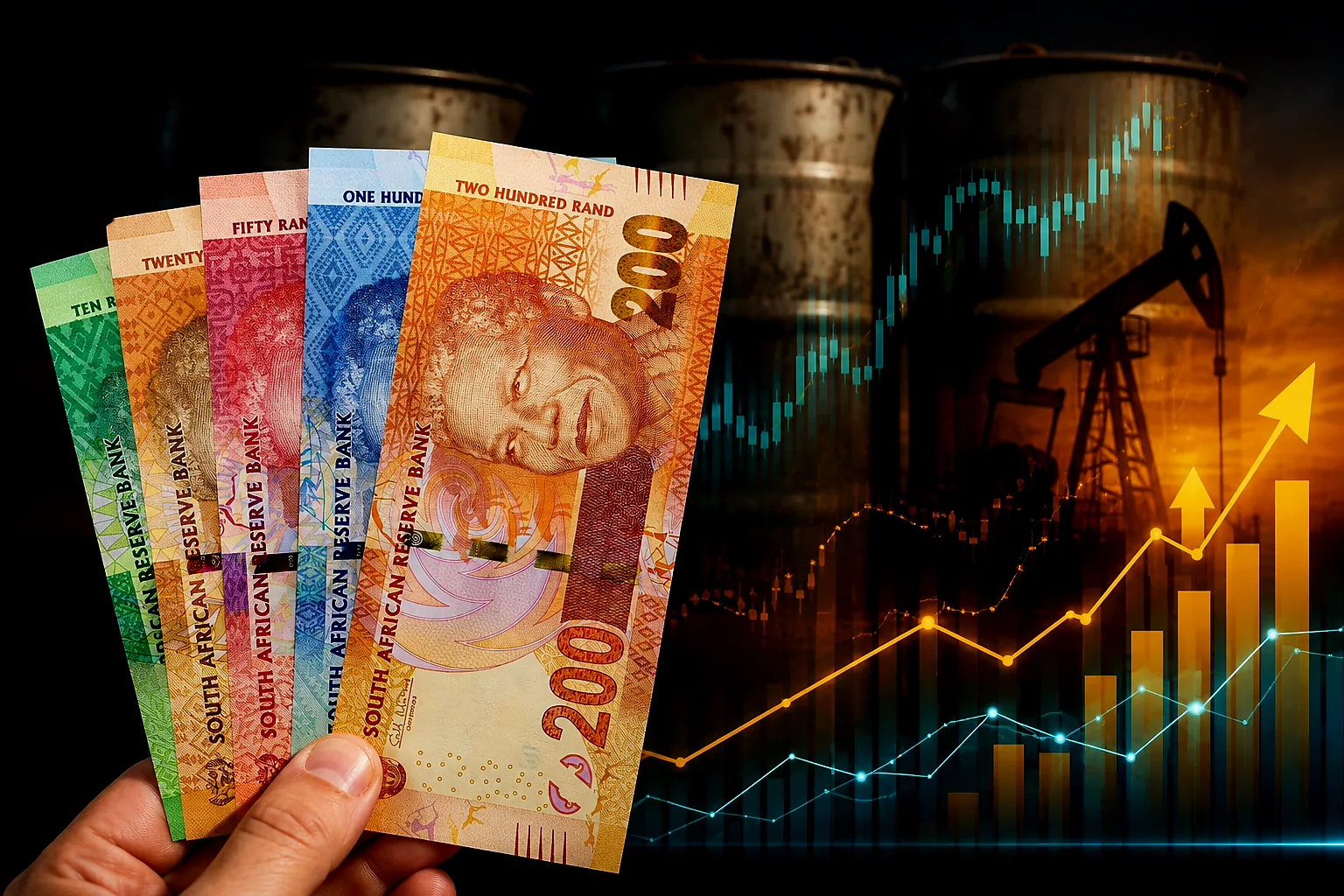
Johannesburg—The South African rand came under pressure in early trading on Tuesday as escalating tensions in the Middle East weakened investor appetite for risk and boosted demand for the U.S. dollar.
At 0653 GMT, the rand was trading around 16.2675 per dollar, down about 0.3% from its previous close.
The dollar strengthened against a basket of major currencies, while oil prices rose for a third consecutive session, adding pressure to oil-importing economies such as South Africa.
South Africa imports most of its fuel, leaving the rand and domestic inflation particularly vulnerable to sustained increases in global energy prices.
Middle East Tensions Remain in Focus
Iran has indicated it could shift to a “fully offensive” military posture after negotiations aimed at securing a permanent end to the conflict stalled. Washington has also ruled out extending its June ceasefire agreement.
The conflict, now more than five months old, has complicated the global interest-rate outlook and increased inflation concerns across major economies.
Inflation Data Ahead
Domestic investors are turning their attention to South Africa's July inflation figures, due on Wednesday.
Economists expect annual inflation to ease to 4.5%, from 5.0% in June, a reading that could influence expectations around the South African Reserve Bank's interest-rate path.
The South African Chamber of Commerce and Industry is also scheduled to release its July Business Confidence Index at 0930 GMT on Tuesday, offering an indication of private-sector sentiment in Africa's largest economy.
South African government bonds also weakened in early trading. The yield on the benchmark 2035 government bond rose 7 basis points to 8.545%.
Source: Reuters
Reporting: Sfundo Parakozov
Editing: Harikrishnan Nair